Signals
Uncovering the truth behind the psychology of read receipts
Problem Space
When people get left on read, it causes chaos.
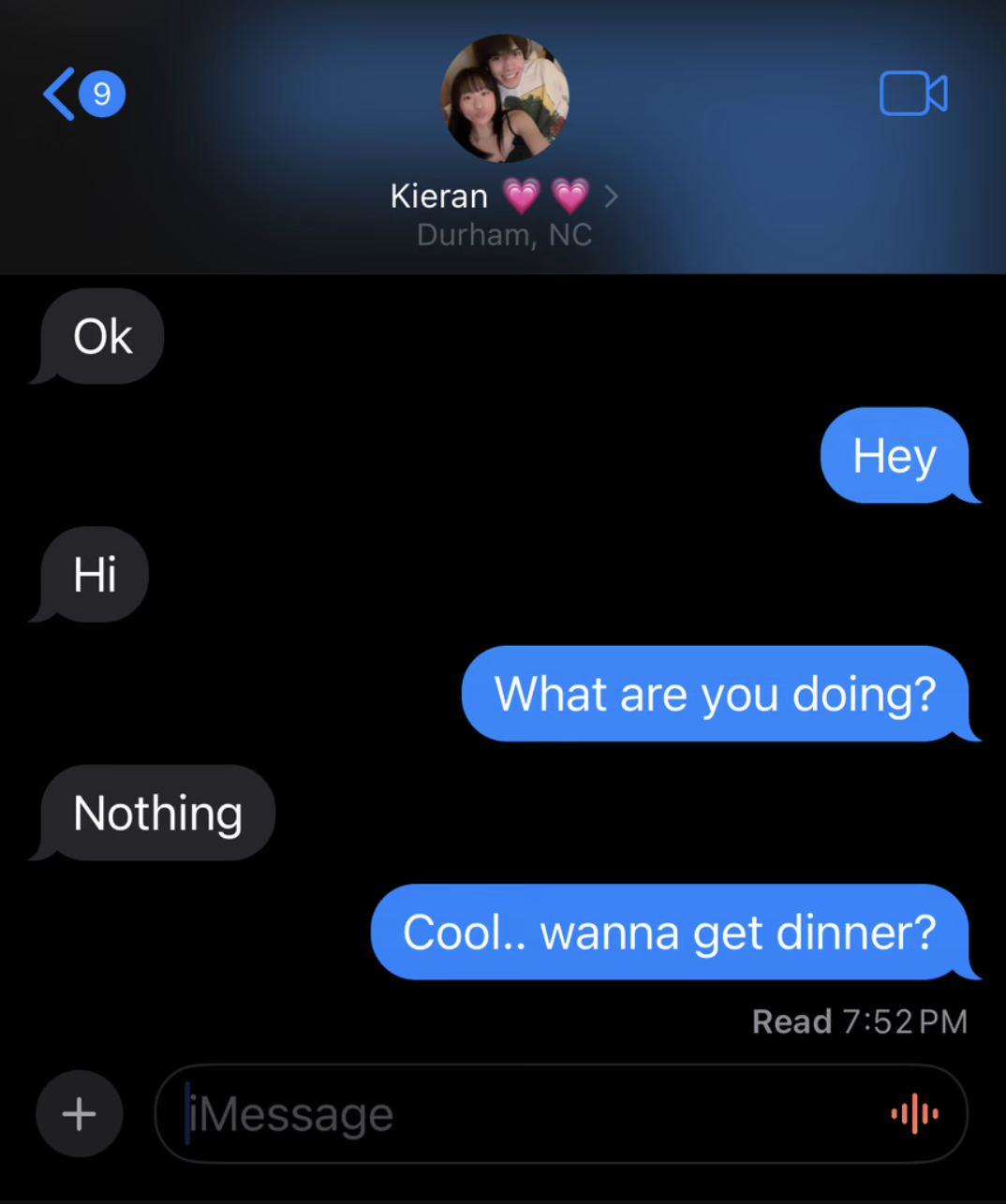
Traditional messaging apps offer only a binary read receipt (“Read” or nothing). This fails to reflect real-life nuances: People read messages when busy and intentions get misinterpreted.
There's so much anxiety around read receipts and wanting to know what the other person is thinking. Frankly, it makes some of us spiral
So, it made me ask the question…
Question
How might we build a feature that helps users feel less misunderstood when texting?
Research
Uncovering the psychology behind read receipts
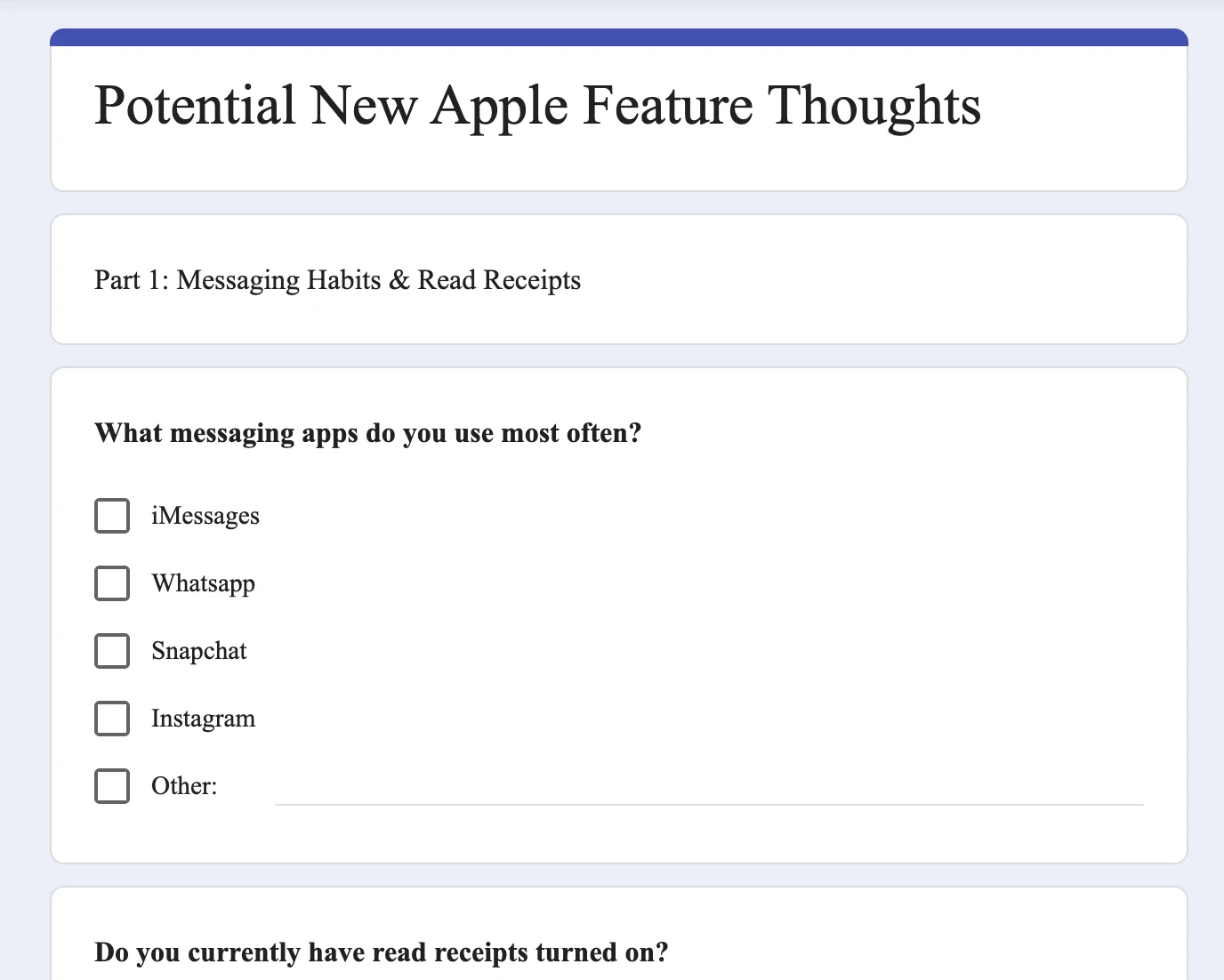
To understand how people experience read receipts today—and how they might react to a feature like Signals—I conducted a survey with 54 participants across diverse messaging habits.
I asked: “Have you ever avoided opening a message to avoid triggering a read receipt?”…
0.0% said
Yes, users OFTEN avoid opening messages to not trigger the other person knowing that they have read the message.
0.0% said
Yes, users OCCASIONALLY avoid opening messages to not trigger the other person knowing that they have read the message.
Insights
Using the data to uncover key insights on behavioral patterns of Apple iMessage Users
- #1Many users disable read receipts entirely to avoid social pressure—even if it compromises communication clarity.
- #2When busy, people often leave friends on read unintentionally, causing friction in otherwise healthy relationships.
- #3A majority expressed desire for a “middle ground”—something between no response and sending a full reply.
Goals
Setting intentions for the new feature
Creating key insights helped me put together what was lacking in digital communication and how Signals can aim to fix these user pain points.
My research throughout this design sprint helped me uncover four main opportunities:
Reducing Social Pressure
A significant portion of users experience anxiety when their messages are read but not promptly responded to. With customization on how you want to respond to someone, social pressure can decrease in both parties!
Providing Clarity on Avoidance
Many users adopt strategies to avoid the implications of read receipts, such as reading messages through notifications or disabling the feature entirely. This indicates a desire for more control over how their message engagement is perceived.
Opening Up Room for Contextual Communication
Users express a need for features that allow them to convey their availability or intent without sending a full message. This includes options to indicate they have seen a message and will respond later, providing clarity without the pressure of immediate replies.
Focusing on the Potential for Customizable Read Receipts
Introducing customizable read receipts can address these concerns by allowing users to send predefined signals indicating their status. This feature can reduce misunderstandings and alleviate the pressure associated with traditional read receipts.
Solution